


Is Dirac Live Room Correction Worth It for Better Sound and Value

A great speaker can still sound average in a bad room. Reflections from walls, bass piling up in corners, and uneven seating positions can turn an expensive system into something that feels slightly off. Dirac Live exists to solve that problem without rebuilding the room.
Dirac Live Room Correction is a software-based calibration system found in many AV receivers, processors, powered speakers, and stereo components. It measures how sound behaves in a specific room, then applies digital filters to improve timing, frequency balance, and overall clarity.
The big question is simple: does it deliver enough improvement to justify the cost, setup time, and learning curve? For many listeners, yes. For some, the answer is more mixed.

What Dirac Live actually does
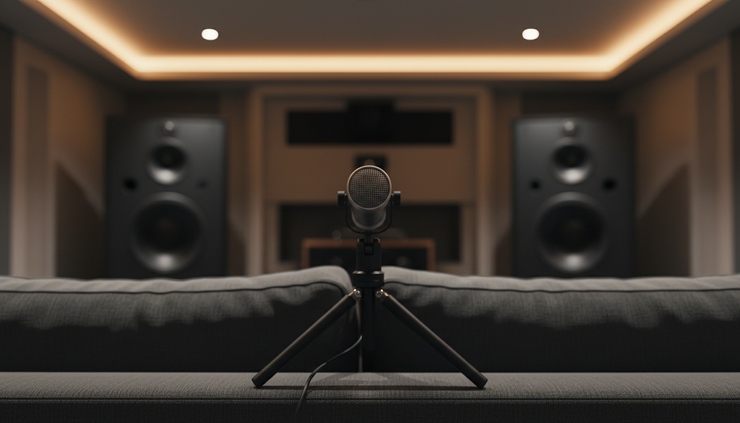
Dirac Live measures the sound from each speaker and subwoofer using a calibrated microphone. The software then compares the measured response against a target curve. After that, it creates correction filters and loads them into the supported device.
Most room correction systems adjust frequency response. Dirac Live also focuses heavily on impulse response, which relates to timing and how sound arrives at the listener. That matters because two systems can measure similarly in tonal balance but feel very different in focus, imaging, and punch.
In practical terms, Dirac Live can help with:
Bass that sounds boomy, thin, or uneven
Dialogue that feels buried in the center channel
Speakers that do not blend well with the subwoofer
Imaging that feels vague or pulled to one side
Harshness from room reflections and peaks
Differences between seats in a living room or theater
It does not replace good speaker placement, acoustic treatment, or proper subwoofer setup. It corrects the system after those choices have already shaped the sound.
That distinction matters. Dirac Live is not magic. It is a powerful finishing tool.
The sound quality benefits can be obvious
The strongest case for Dirac Live is not that it makes a system sound different. It makes many systems sound more controlled.
Bass is usually the first thing people notice. Rooms create large peaks and dips at low frequencies. A subwoofer may sound huge in one seat and weak in another. Dirac can reduce peaks, smooth transitions, and make bass feel tighter.
That can change the whole system. When bass stops overwhelming the room, dialogue becomes easier to follow. Music gains separation. Movie effects hit harder because they are cleaner, not just louder.
The second major benefit is imaging. With careful measurements, Dirac can improve how speakers work together in time. Stereo vocals may lock into the center more clearly. Surround effects may move across the room with fewer jumps. A well-calibrated system often feels less like individual speakers and more like one sound field.
For home theater, this can make a large difference. A good Home Theater Calibration should make the system disappear. Dirac Live often gets closer to that goal than basic level matching and distance settings alone.
Audio professionals usually agree on one point: room correction is most useful when it fixes room-driven problems, not when it tries to rescue poor speaker placement or low-quality equipment.
That is the right frame. Dirac Live improves the relationship between the system and the room. It cannot turn a weak speaker into a great one, but it can help a good speaker perform much closer to its potential.
The listening experience feels less fatiguing
Better measurements are useful, but the real test is long-term listening.
A system with strong room peaks can seem exciting for a few minutes, then tiring. Bright reflections can make vocals sharp. Uneven bass can make every movie soundtrack feel overloaded. After calibration, many listeners describe the result as calmer, clearer, and easier to enjoy at normal volume.
Common owner feedback often sounds like this:
“I thought my subwoofer was the problem. After running Dirac, I realized the room was the problem. The bass was still strong, but it stopped booming over everything else.”
Another common reaction centers on dialogue:
“The biggest surprise was the center channel. I stopped reaching for the remote during quiet scenes because voices were easier to understand.”
These are composite examples based on typical user reports, not claims from a specific named person. Still, they match a pattern seen across many rooms: the biggest improvement often comes from fixing the most annoying problem, not from making everything sound dramatically new.
For two-channel music, reactions can be more personal. Some listeners love the extra focus and tonal balance. Others prefer a lighter correction curve or correction only below a certain frequency. Dirac allows target curve editing, which helps. The best result is rarely the default curve left untouched forever.
The cost compared with traditional calibration
Dirac Live can look expensive if treated as just an app. It makes more sense when compared with other ways to calibrate a system.
Costs vary by product. Some AV receivers and processors include a Dirac Live license. Others require a paid upgrade. A compatible measurement microphone may also be needed, although some systems include one. Advanced modules, such as multi-subwoofer tools, can add more cost.
Here is the broad comparison.
Calibration method | Typical cost level | What you get | Main limitation |
Manual setup with tape measure and SPL meter | Low | Speaker distances, levels, and basic balance | Does not correct room response or timing issues |
Built-in basic AVR correction | Included with many receivers | Automated setup and some EQ | Quality varies widely by brand and model |
Dirac Live Room Correction | Mid to high | Detailed measurement, target curves, timing correction | Requires compatible gear and careful setup |
Professional calibrator | High | Expert setup, measurement skill, system tuning | Costs more and depends on local availability |
Traditional manual calibration is still useful. Setting speaker levels and distances correctly matters. But manual tools alone cannot apply the kind of detailed filters Dirac creates.
A professional calibrator can deliver excellent results, especially in complex rooms with multiple subwoofers, theater seating, acoustic treatment, or premium processors. The tradeoff is cost. A professional visit can cost several hundred dollars and may climb much higher for advanced systems, travel, and additional tuning.
Dirac sits in the middle. It gives enthusiasts access to powerful measurement and correction tools without paying for a full custom calibration every time the room changes. Move a subwoofer, replace speakers, add a rug, or change seating, and the system can be measured again.
That repeatability is part of the value. The first calibration may take time. The second one is usually much easier.
Bass control may be the strongest upgrade
Low-frequency sound is where rooms cause the most trouble. That is also where room correction can bring the biggest audible win.
Standard Dirac Live can correct a subwoofer channel as part of the system. More advanced setups may support Dirac Live Room Correction with Bass Control, which is designed to manage the blend between speakers and one or more subwoofers more intelligently.
This matters because bass is not just about the sub. The crossover region, where speakers hand off to the subwoofer, can make or break the system. If the timing or level is wrong, the sound may have a hole, a hump, or a disconnected quality.
Bass Control is especially attractive for systems with:
Two or more subwoofers
Multiple listening seats
Open-concept rooms
Large rooms with uneven bass
Home theaters where impact and clarity both matter
For a single-seat stereo setup, the upgrade may be less urgent. For a multi-seat theater, it can be one of the more meaningful improvements available.

Expert opinions are supportive but not absolute
Many audio engineers, calibrators, and experienced hobbyists support room correction, with one clear warning: measurement software cannot ignore physics.
Experts tend to recommend the same order of operations:
Place speakers and subwoofers as well as the room allows.
Set crossover points and levels sensibly.
Add acoustic treatment where practical.
Measure the system.
Apply correction carefully.
Listen and adjust the target curve.
That last step is important. A perfectly flat measurement is not always the most pleasing sound in a living room. Many listeners prefer a gentle downward slope from bass to treble, often called a house curve. Dirac lets users shape that curve instead of accepting one fixed result.
Professional calibrators also point out that microphone technique matters. Measurements should cover the real listening area without spreading so wide that the correction becomes too general. A single-chair music setup needs a different measurement pattern than a family theater with a full sofa.
In other words, Dirac Live is expert-friendly because it gives control. It is beginner-friendly because it guides the process. But the best outcomes come from learning what the controls mean.
The drawbacks are real
Dirac Live is not the right answer for every system. Its downsides are not deal breakers, but they deserve attention.
The setup takes care
Running Dirac is not hard, but it is more involved than pressing one button on a receiver remote. The microphone needs to be placed correctly. The room should be quiet during measurements. The user must choose or edit a target curve, then load the filters.
Rushed measurements can lead to disappointing results.
The sound can feel too controlled at first
Some listeners miss the extra bloom or brightness their room added. Cleaner sound may seem less exciting during the first hour. After a few days, many people prefer the corrected version, but not everyone does.
Target curve editing helps here. Correction does not have to mean sterile sound.
It cannot fix deep nulls
If the room creates a major bass cancellation at the listening position, EQ cannot fully solve it. Boosting a deep null usually wastes amplifier power and may stress the subwoofer. Moving the sub, adding another sub, or changing the seat location often works better.
Compatibility can limit choices
Dirac requires supported hardware. If a receiver, processor, or speaker system does not include Dirac support, the upgrade may require new equipment. Licenses can also be tied to specific devices or feature levels.
Some features cost extra
The base version may be enough for many systems. Advanced bass features can add cost. That is fair if the system needs them, but it can surprise buyers who assumed every Dirac feature was included.
It adds processing
Digital correction requires signal processing. In most home theater systems, this is not a problem. In some music or gaming setups, users may care about latency, conversion paths, or pure analog playback. The practical impact depends on the device and use case.

Who gets the most value from Dirac Live
Dirac Live is most worth it when the room is clearly holding the system back.
Good candidates include:
A home theater with strong bass problems
A room where dialogue is hard to understand
A system with quality speakers that still sounds uneven
A listener who enjoys tuning and comparing results
A multi-seat setup where consistency matters
A system with multiple subwoofers
It may be less valuable for:
A simple soundbar setup
A nearfield desktop system in a controlled space
A room where speaker placement cannot change at all
A listener who dislikes software setup
A very budget system where money would be better spent on speakers or subwoofer quality
The value also changes with expectations. If the goal is a night-and-day transformation from poor speaker placement, disappointment is possible. If the goal is cleaner bass, better integration, clearer dialogue, and more consistent sound, Dirac has a strong chance of delivering.
Is it worth paying for?
For many serious listeners, Dirac Live is worth it. The value is strongest when it is already included in the hardware or available as a reasonably priced upgrade on a system good enough to reveal the difference.
Compared with traditional calibration, Dirac offers a useful middle path. It is more powerful than basic manual setup. It is more repeatable and affordable over time than hiring a professional for every change. It also gives control to people who want to learn their room instead of guessing.
A professional calibrator can still be the better choice for a high-end dedicated theater, tricky multi-sub layout, or owner who wants the best result without spending time learning software. Dirac does not replace expertise. It makes better calibration more accessible.
The smartest approach is simple: treat Dirac Live as part of the system, not an add-on miracle. Start with solid speaker placement. Use a good microphone. Take careful measurements. Try more than one target curve. Listen for a week before making final judgments.
If the room is the weak link, Dirac Live can be one of the best sound upgrades available. It may not be as exciting to buy as a new amplifier or bigger speakers, but in many real homes, it can make the gear already in the room sound like it finally belongs there.


Comments